Updated: March 19, 2026 at 19:44 IST
The Internet Created the Biggest Stage in History
For most of human history, only a small group of people controlled publishing. Newspapers, television networks, and media companies decided whose voice reached the public.
The internet quietly changed that rule.
Today anyone with a phone, laptop, or internet connection can publish ideas, lessons, stories, and experiences. Yet something interesting still happens: most people continue to sit in the audience.
They read, watch, scroll, and consume.
Very few people press publish.
 ⚑
⚑The Creator Economy Should Not Belong to a Few
The creator economy is often associated with influencers, viral entertainers, or internet celebrities. A small percentage of creators capture most of the attention while millions of people quietly observe from the sidelines.
But the internet becomes richer when more voices participate.
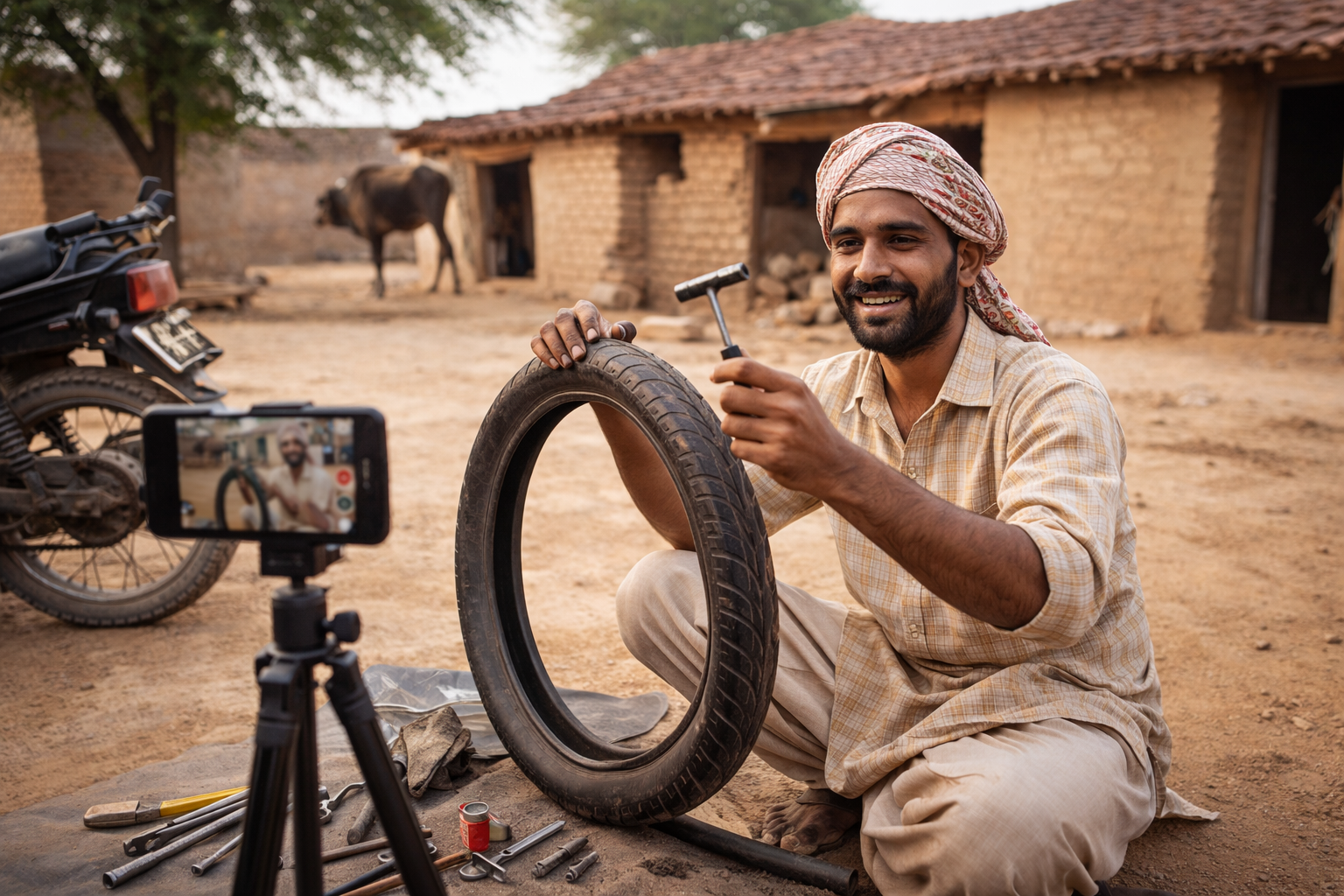
Teachers, mechanics, farmers, designers, students, freelancers, parents—every person carries experiences that others can learn from. When only a few voices dominate, the internet becomes repetitive.
The real promise of the internet was diversity of perspective.
Talent Is Not the Real Barrier — Courage Is
Many successful creators did not begin with extraordinary talent. Their early content was often simple, unpolished, and imperfect.
The difference was not talent. It was courage.
The biggest difference between creators and everyone else is simple: creators pressed publish.
Most people never start because they fear judgment, criticism, or the feeling that their voice may not matter. But creation is a skill that improves through practice, not preparation.
Every Human Life Is a Library of Experience
Every person collects lessons throughout life. Work experiences, failures, successes, relationships, and mistakes all build a kind of knowledge library.
What feels ordinary to you may be valuable to someone else.
Examples of valuable everyday knowledge
- A mechanic explaining common engine problems
- A student sharing practical study techniques
- A parent sharing real parenting lessons
- A freelancer explaining mistakes in early projects
- A farmer explaining soil and crop patterns
These grounded insights often feel more real and helpful than polished influencer advice.
Algorithms Often Reward Authentic Voices
Modern platforms increasingly reward engagement and authenticity. Content that feels real, relatable, and honest tends to build deeper connections.
Audiences are becoming more sensitive to overly polished content. People often respond better to genuine experiences, lessons, and storytelling.
This means ordinary creators with authentic perspectives can still find meaningful audiences.
Ignore the Numbers in the Beginning
One of the biggest reasons people stop creating is the early lack of attention.
The first posts might receive very few views. That is normal.
Creation works more like compounding than instant success. Over time, consistent sharing helps platforms understand who your audience might be.
- The first 20 posts build practice.
- The next 50 posts build consistency.
- The next 100 posts start building discovery.
The early stage is about learning, not popularity.
Hidden Talent Exists Everywhere
Not everyone wants to become famous online, and that is perfectly fine. But many people carry valuable skills and insights that deserve to be documented and shared.
Across the world there are teachers, craftspeople, engineers, artists, and workers with deep knowledge that rarely appears online.
The internet improves when those voices participate.
Creating Is Not Only About Money
While the creator economy often focuses on monetization, creation offers other meaningful benefits.
Benefits of becoming a creator
- Documenting your personal journey
- Helping strangers learn from your experiences
- Building connections with like-minded people
- Learning faster by teaching others
- Building reputation in your field
Money may come later, but meaning often comes first.
What Should You Share?
Many people hesitate because they believe they have nothing to share. In reality, simple insights can be incredibly useful.
Simple ideas to start with
- Lessons from your job or profession
- Mistakes you made and what they taught you
- Things you recently learned
- Small life insights
- Local knowledge or cultural experiences
The goal is not perfection. The goal is honesty.
Start Small. Start Honest.
You do not need a studio or professional equipment.
- Write short posts
- Record simple videos
- Share ideas from your phone
- Publish consistently
The most important step is starting.
The Internet Needs More Real People
The creator economy should not belong only to influencers or viral entertainers. It should belong to ordinary people sharing real experiences.
The internet becomes more valuable when it reflects diverse lives, professions, cultures, and perspectives.
Don’t wait to become perfect. Start sharing what belongs to you.
Frequently Asked Questions
Do I need special talent to become a creator?
No. Many creators begin with simple ideas and improve over time. Consistency and authenticity often matter more than initial talent.
What is the best thing to share as a beginner?
Start with lessons from your own life—work experiences, personal insights, mistakes, and things you recently learned. Real experiences are often the most valuable.
How long does it take to build an audience?
Audience growth varies widely. Some creators grow quickly, while others build slowly over months or years. The key is consistent sharing rather than chasing early popularity.
Conclusion
Every human life carries knowledge worth sharing. The internet gave us the tools to publish those lessons, yet many people still hesitate to speak.
You do not need millions of followers. Even a small audience can benefit from your experience.
The creator economy becomes stronger when more people participate.
Press publish. Share what life has taught you. Let the internet discover your voice.