
- Time
- 10 minutes prep, plus optional 1-2 hours chilling
- Yield
- One 10-12″ tart crust, 12 servings
- Skill
- Beginner
- Tools
- Stand mixer, rolling pin, tart pan
This sweet tart dough takes about 10 minutes to mix and gives you one 10-12″ tart crust. It bakes up crisp and sturdy enough to hold pastry cream or fresh fruit without going soggy. Once you can make it, you have the base for a classic fruit tart with custard and many other dessert tarts, from French apple to chocolate caramel.
What makes this dough work
Pâte sucrée, also called sweet dough or sweet short dough, is the dough most often used for dessert tarts. The method is short: cream butter and sugar, add the egg, add the flour, and you're nearly done.
In the US, a pie crust is usually a flaky, savory dough, while a tart crust is usually a sweet short dough like this one. Technically, the only real difference between the two is the pan they're baked in. All purpose flour, a medium-protein flour, works well here.
What you will need
- 4 oz unsalted butter, at room temperature
- 4 oz granulated sugar (½ cup)
- 1 large egg
- ¼ teaspoon vanilla extract
- 6 ¼ oz all purpose flour (1 ¼ cups)
- ¼ teaspoon salt
- A stand mixer
- A rolling pin
- A 10-12″ tart pan (a 12″ pan works)
- A fork and plastic wrap
Measuring flour by volume
If you're using cups instead of weighing, use the dip and sweep method. Dip the measuring cup into the flour bin, overfill it, then sweep away the excess.
Step by step
- Cream the butter and sugar. Beat the butter and sugar until they're combined and creamy. Stop when they're only slightly aerated, not light and fluffy.
- Add the egg and vanilla. Mix them in, then scrape down the bowl and beater.
- Add the flour and salt. Mix only until the dough just comes together. It will look like a crumbly mixture.
- Squeeze it together. Dump the crumbs onto your work surface and press the clumps together with your hand.
- Knead and shape. Knead the dough briefly into a ball, then flatten it into a disc. You can roll it right away, or wrap it in plastic and refrigerate it for 1-2 hours until you're ready.
- Loosen and roll. Press down on the disc with the rolling pin to loosen it up. Then roll it to about 1/8″ thick and at least 4″ larger than your pan.
- Move it to the pan. Roll the dough onto the rolling pin, lift it over the pan and unroll it. Tuck it into the bottom and sides of the pan with your hand.
- Trim the edge. Roll the pin over the rim of the pan to cut away the excess dough. Pull off the scraps and save them to use again.
- Dock the base. Prick the bottom of the shell all over with a fork.
- Chill or bake. If your tart recipe calls for an unbaked shell, refrigerate it until you're ready to fill it. If it needs a baked shell, bake at 375°F for about 10-15 minutes until golden brown, or follow the pre-baking instructions in your tart recipe.
Do you need to pre-bake?
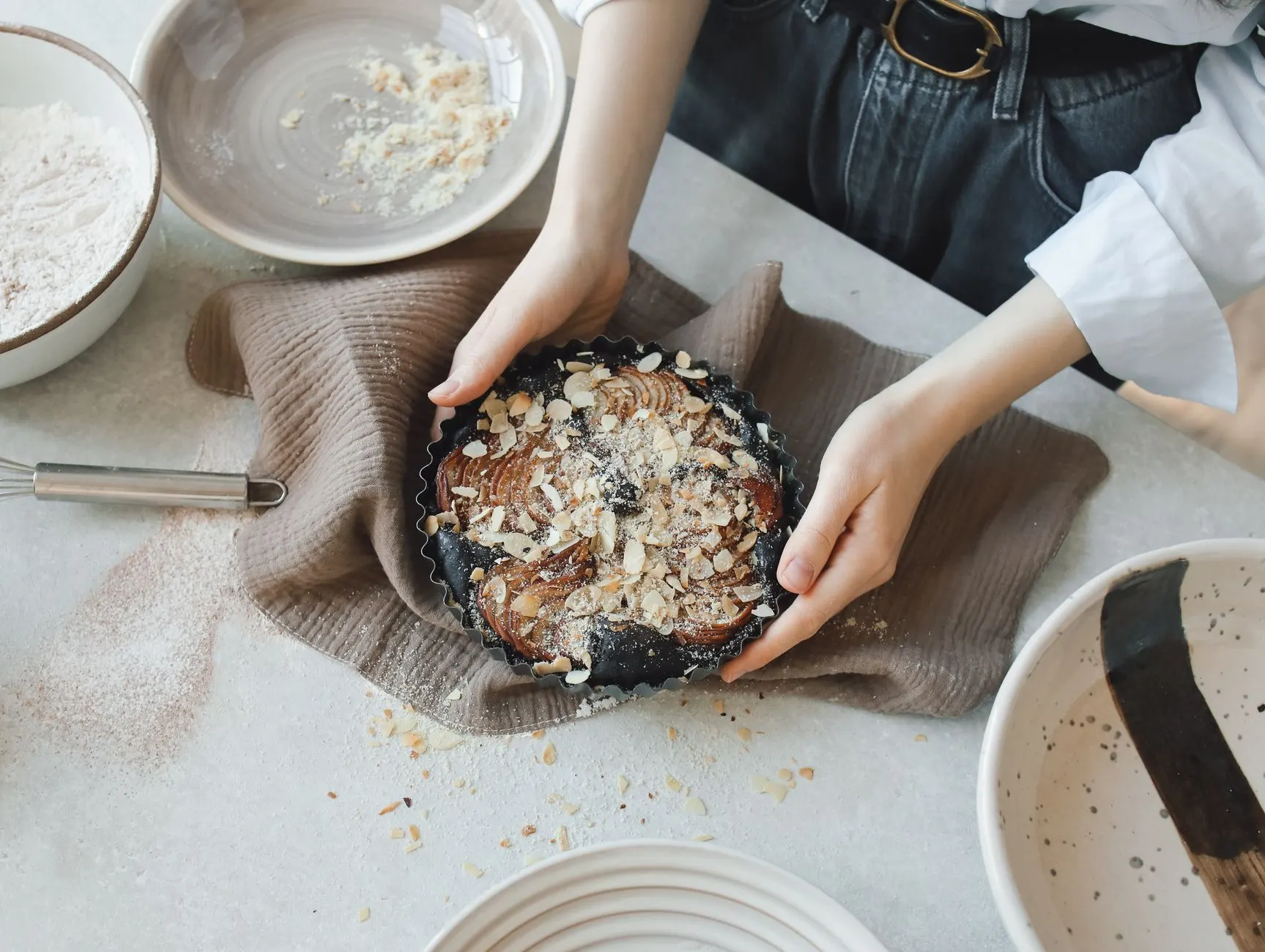
It depends on the filling. If the filling doesn't get baked, as in a rhubarb meringue tart, pre-bake the shell. If the filling bakes in the shell, as in a pear frangipane tart, there's no need to pre-bake.
Storing the dough and shells
- Unbaked dough: Wrap it and keep it in the refrigerator for 3-4 days.
- Frozen dough: It freezes very well. Double wrap it in plastic and freeze it for up to 3 months.
- Baked shell: An unfilled baked shell keeps at room temperature for 2-3 days.
Plan your week around it
Because the dough keeps for days in the fridge and months in the freezer, you can mix it one evening and roll and fill it when you have time.
Where to take it next
This dough is a good base for French apple tart, chocolate cherry cheesecake tart, pear custard tart, raspberry rose tarts, apple frangipane tart, pink grapefruit tart, blueberry cheesecake tart and chocolate caramel crackle tart. It also works for miniature tarts.
Nutrition per serving
Based on 12 servings, each serving has about 163 kcal, 21 g carbohydrates, 2 g protein, 8 g fat (5 g saturated, 0.4 g polyunsaturated, 2 g monounsaturated, 0.3 g trans), 34 mg cholesterol, 55 mg sodium, 23 mg potassium, 0.4 g fiber, 10 g sugar, 256 IU vitamin A, 7 mg calcium and 1 mg iron.

0 comments
Join the conversation