
- Skill
- Beginner
- Scope
- One song, one rehearsal pass
- Tools
- Click, individual monitor mixes
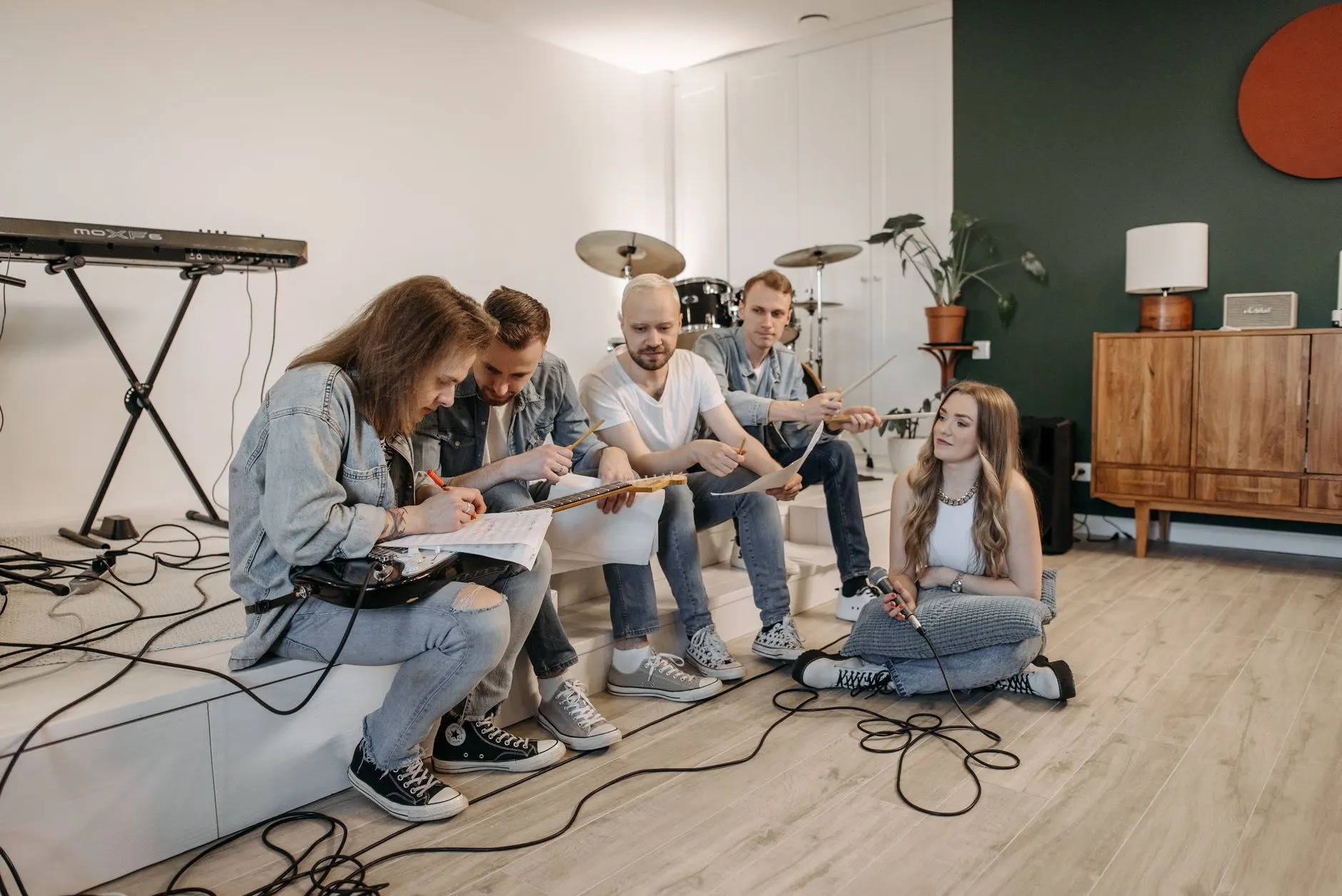
You will build a short cue map for one song that shows, section by section, what each musician follows, what they lead and what they do when a cue goes past. It takes one focused rehearsal pass on a single arrangement, and it replaces "turn the click up for everyone" with assignments you have actually tested.
The usual symptoms are familiar. The singer asks when to come in, the guitarist guesses through a quiet intro, and nobody has agreed who holds the tempo in the breakdown. Those are separate timing jobs, and a louder click does not tell anyone which entrance to lead or whose cue to follow.
What you will need
- One song your band already plays with a click
- Your click source and any fixed playback (loops, sequenced parts, backing vocals)
- Individual monitor feeds for each player
- A worksheet on paper or in a spreadsheet
- Everyone in their normal performance positions
The three cue types
Each cue answers a different question. They can overlap, but give each one a clear purpose.
Continuous click answers "where is the beat?" It suits anyone who must stay locked to fixed playback through a section, especially when little else in the music is rhythmic. A drummer playing only occasional accents in a sparse breakdown may need it, because those accents still have to land against the track. More than one player can need it. If guitar and percussion both have exposed, independent parts against playback, check each player's reference separately.
Count-in gives tempo, meter and a shared starting point. It may be all someone needs if they can follow the ensemble once the song is moving. It does not cover a later gap, so check the whole arrangement before settling on it.
Entrance cue answers "where do I come in?" A vocalist returning after a long instrumental can hear every beat and still lose track of the bar. Use a specific drum fill, keyboard pickup, or a preparatory gesture followed by a clear downbeat. A musical cue must be audible in the recipient's mix. A visual cue needs a clear sightline from where they stand. Individual in-ear monitors can carry agreed audio cues when connected to the right monitor feed, but the band still has to decide who gets what.
Say exactly what the count-in means
"You'll hear a few clicks" is too loose. For a song in 4/4, say "two bars of quarter-note clicks, then enter on the next beat one." If there is a pickup, name its beat.
Step by step
-
Note why the click is there. If the song has fixed playback, mark the sections where those prerecorded parts set the timing, since they run on their own timeline. If there is no playback, write down the purpose instead, such as setting the opening tempo or keeping an agreed pulse throughout. No tracks does not, on its own, decide anyone's click needs.
-
Ask three questions per section. Who anchors the live ensemble, meaning whose playing the others use as their timing reference? What happens when that reference disappears during rests, sparse breakdowns, sustained chords or passages where the usual timekeeper stops? Who leads the next entrance, including anyone coming back after a long rest?
-
Assign by role, not by instrument. A drummer may anchor most of a song yet play nothing during an exposed keyboard intro. If that intro must line up with playback, the keyboard player needs a reliable reference there. Running playback and leading the band are also separate jobs, even when one person does both.
-
Fill in the worksheet. Make one row per player per section, including players proposing no direct click, and add rows whenever a responsibility changes. Use these columns: Section, Player, Timing responsibility, Proposed cue requirement (continuous click, count-in, entrance cue, or a combination), Cue source/provider, and Agreed missed-cue response. Treat every entry as a rehearsal proposal, not a final rule.
-
Agree a missed-cue response. Fit it to the arrangement. For example, decide whether a player should wait for a named later entrance rather than guess, and record who supplies that next cue.
-
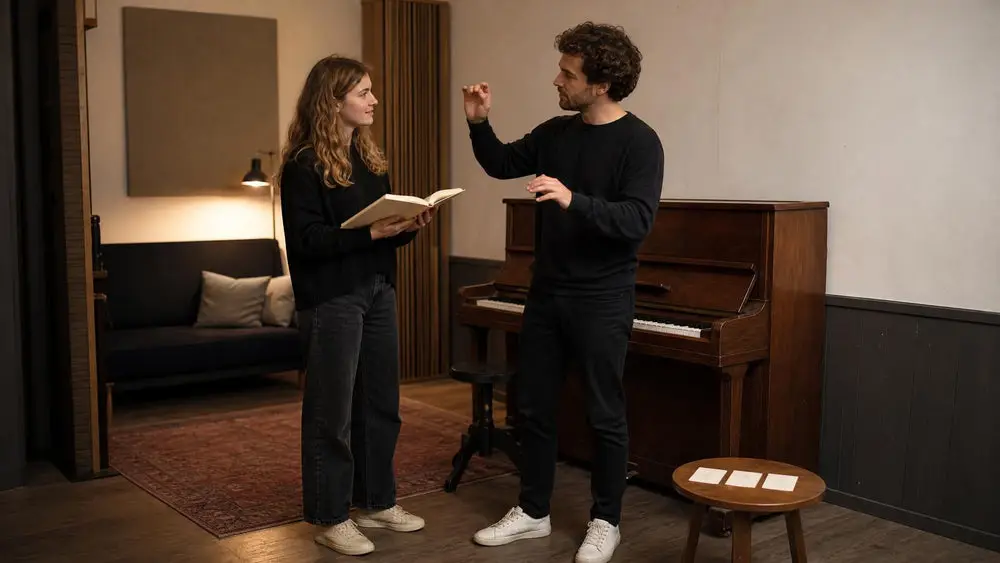
Read the map back. Each player names their responsibility, cue, provider and missed-cue response. Settle any "I thought you were leading" moments now.
-
Play the opening. Use the real count-in and the intended monitor feeds. Check pickups and whose playing everyone follows afterward.
-
Run into the sparse passage. Start several bars early. Check alignment with playback where there is any, and whether each player's reference stays usable.
-
Test the re-entry. Include the rest before it, and use normal stage positions and movement to confirm the cue arrives early enough. A nod on the entrance itself may come too late for a breath or pickup.
-
Rehearse a missed cue on purpose. Agree in advance that one recipient will let a musical or visual cue pass. Check that both recipient and provider carry out the recorded response.
-
Fix one unclear assignment and repeat. Swap a vague instruction for a specific cue, or reconsider continuous click where the proposed reference fell short.
Two sample rows
These are illustrations, not complete band maps.
A track-dependent breakdown. A fixed percussion track runs through a sparse breakdown.
- Drummer, breakdown: aligns accents with playback and leads the return, using a continuous playback click. If a return accent is missed, keep the timeline and play the next agreed beat-one accent.
- Vocalist, vocal return: enters on the agreed bar, cued by the bandleader with a preparatory gesture and downbeat. If missed, wait for the repeated gesture at the next agreed phrase.
An untracked song. The click only sets the opening tempo. The guitarist leads the intro and the drummer leads once the band enters.
- Guitarist, intro: leads the opening figure from a two-bar count-in on the rehearsal click. If missed, wait while the bandleader asks for a fresh count-in.
- Vocalist, later entrance: follows the drummer's pulse and enters after a rest on a drum pickup. If missed, wait for the agreed pickup into the next phrase.
Testable, not prescriptive
The untracked example is one choice to try, not a rule for cutting down click recipients. Keep whatever the rehearsal shows actually works.
When the map is working
A good pass ends with every player knowing what they follow, when that changes, what they lead and what to do if an entrance cue is missed. Keep the tested map with the arrangement and revisit it whenever the parts change.

0 comments
Join the conversation