

- Skill
- Beginner
- Tools
- Body weight; bands or weights optional
Resistance training builds functional strength, the kind you use to carry, lift, climb and get up off the floor, and it supports long-term health. This guide helps you plan a safe first session you can fit into a free hour, plus a way to keep going once the first one is done.
What counts as resistance training
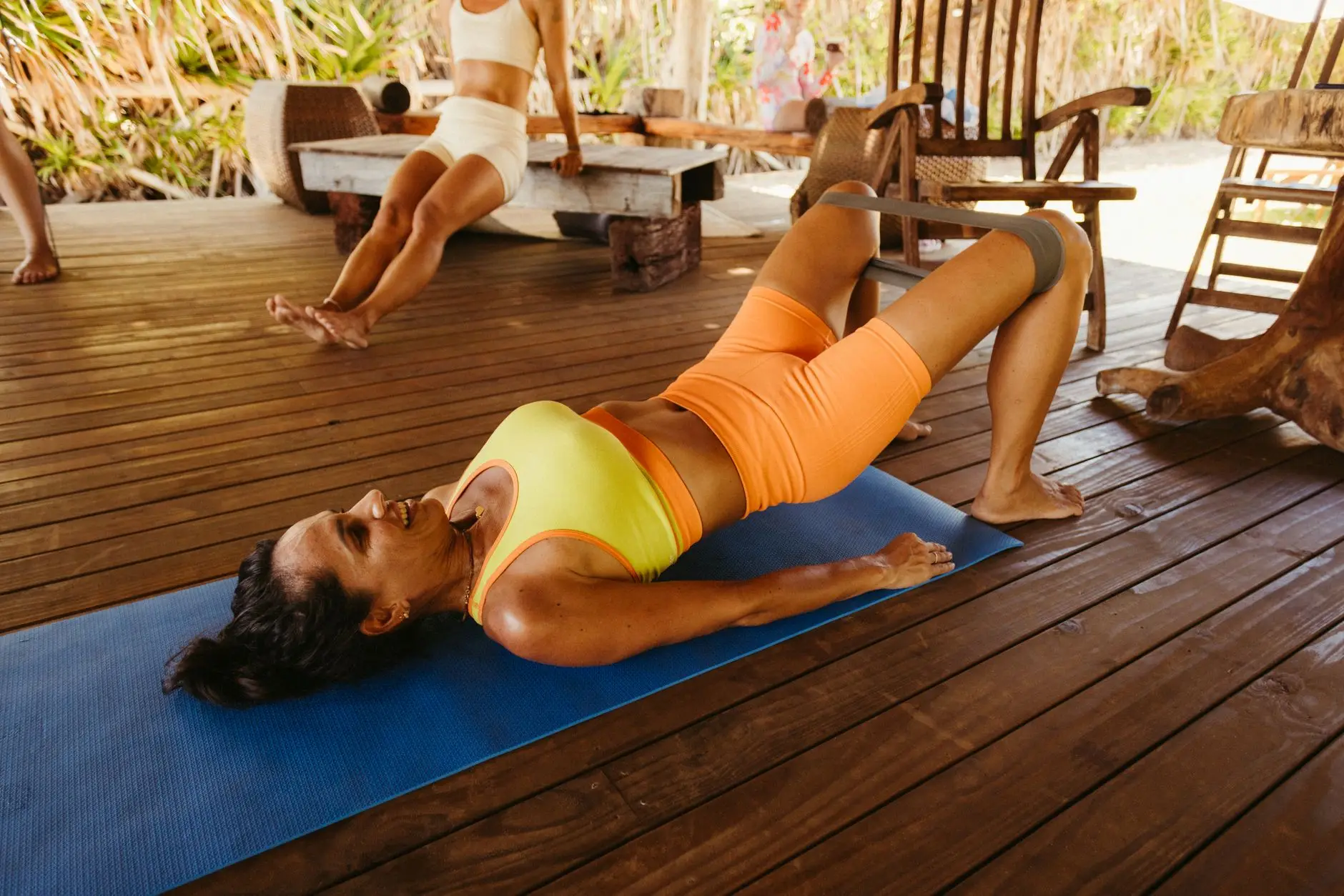
Any time your muscles work against a load, you are doing resistance training. That load can be your own body weight, an elastic band, free weights or a machine. You don't need a gym to begin. A clear patch of floor and some attention to how you move are enough for a first session.
The goal at the start is strength you can use in daily life. Think of movements that look like everyday tasks rather than isolated exercises for single muscles.
Choose a few basic movements
Rather than collecting dozens of exercises, pick one option for each of these everyday movement patterns:
- Squat: sitting down and standing up, as with getting out of a chair.
- Hinge: bending at the hips to pick something up from the floor.
- Push: pressing away from you, as in a push-up against a wall or counter.
- Pull: drawing something toward you, as with a band anchored in front of you.
- Carry: holding a load and walking with it, such as a full bag in each hand.
Covering these patterns works most of the body. Start with the simplest version of each one you can do with control. You can make them harder later.
Plan your first session
Warm up first. Spend a few minutes moving easily, with gentle walking, arm circles and slow practice squats, so your body is ready before you add any load.
Learn the movement before the load. Do each exercise slowly and watch your form. A mirror or a phone video helps you spot problems like a rounded back during a hinge or knees caving in during a squat.
Choose a load you can control. Pick a resistance that lets you finish every repetition with steady, clean form. If your form breaks down, the load is too heavy for now.
Rest between efforts. Take a short break between rounds so each one gets your full attention.
Cool down. Finish with a few minutes of easy movement and let your breathing settle.
Stop if something hurts
Muscle effort and fatigue are expected, but sharp or joint pain is not. Stop if something hurts, and check with a health professional before starting if you have an injury, a medical condition or any doubts about exercising.
Progress gradually
Strength builds over time, so increase the challenge in small steps. Once a movement feels steady and controlled, you can make it a little harder by adding a few more repetitions, choosing a slightly heavier load or a firmer band, or moving to a harder version, such as going from a wall push-up to a counter push-up.
Change only one thing at a time. That way you can tell what your body is responding to, and you're less likely to overdo it.
Give your muscles time to recover between sessions that work the same movements. Recovery is part of training, not time off from it.
Keep a short log
Write down the exercises you did, the load and how each one felt. A few lines per session show your progress and make it easier to decide when to step up.
Make it a habit
Consistency matters more than any single workout. Put your sessions on the calendar like appointments, and keep them short enough that you'll actually show up. Some days will feel stronger than others, and that's normal. On a low day, a lighter session with good form still counts.
As you get comfortable, notice how everyday tasks feel. Carrying groceries, taking the stairs or lifting a box are the real tests of functional strength, and paying attention to them keeps your training tied to the life you're building it for.
Adapted from Benefits of Resistance Training and How to Get Started by the Human Performance Resource Center (hprc-online.org).




0 comments
Join the conversation