
- Skill
- Beginner
- Crown planting
- November to March
- Spacing
- 75 to 100cm between plants
- Tools
- Spade, watering can
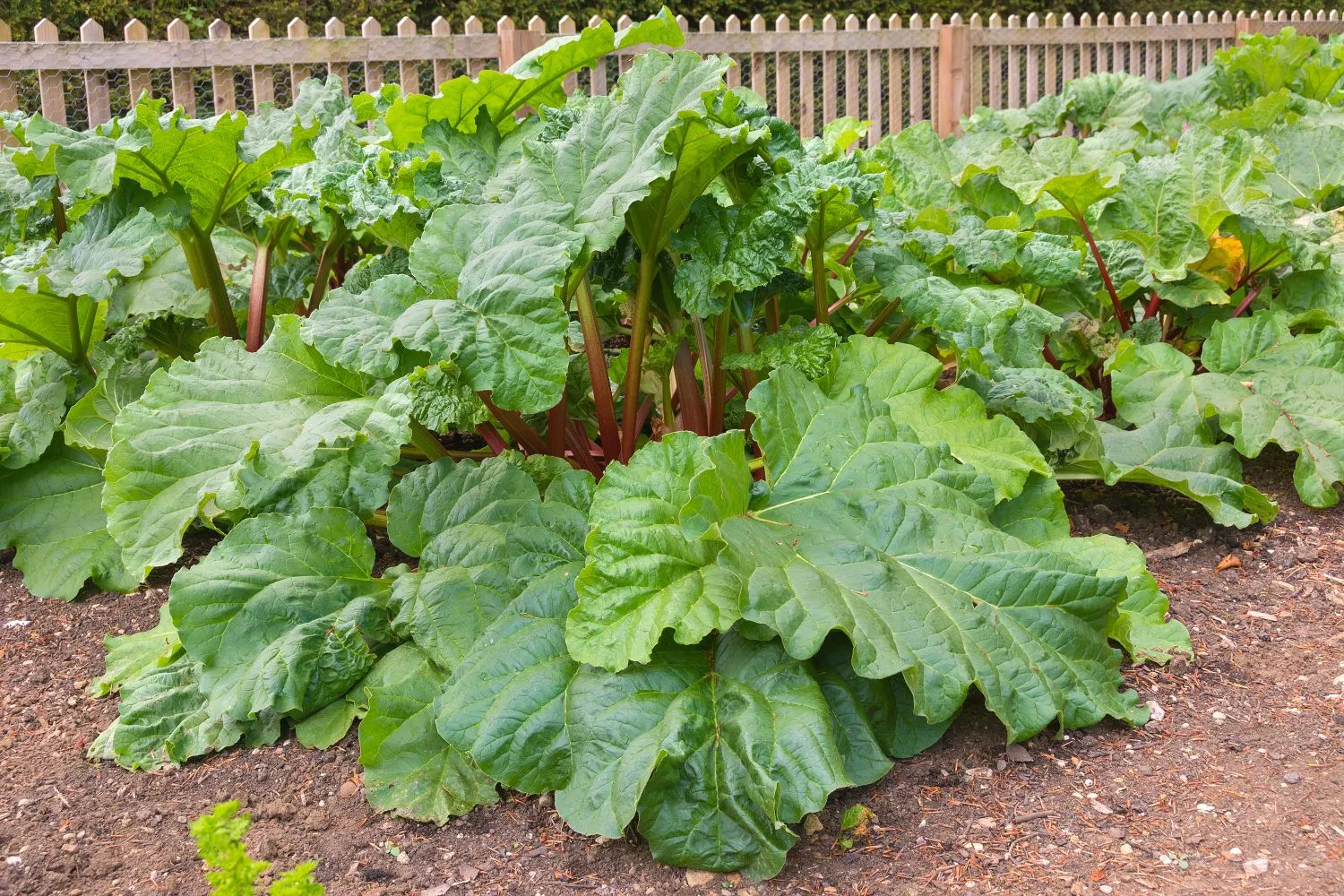
Rhubarb (Rheum x hybridum) is a perennial, so one planting session gives you stems for crumbles and pies year after year. Setting a crown in the ground or in a large pot fits into a free hour. The real wait comes afterward, while the plant settles in before its first harvest.
Pick your timing
Rhubarb is sold in two forms: dormant crowns, also called offsets, and potted plants.
- Crowns are sold from early winter until early spring, and you plant them within that window. In practice that means November until March.
- Potted plants can go in at any time of year, as long as the ground is not frozen or waterlogged.
You can also get new plants for free by dividing an existing rhubarb plant in autumn.
Choose the spot
Rhubarb does best in an open, sunny position. It will grow in light shade, but fewer hours of sun can make it struggle and give you a poor harvest.
It tolerates most soils. Its favorite is fertile, moist soil that drains freely and never sits waterlogged. Plants get large over time, so if you are growing more than one, space them 75 to 100cm apart.
What you will need
- A rhubarb crown or potted rhubarb plant
- Well-rotted manure or garden compost
- A spade
- A watering can or hose
- For containers: a pot at least 50 to 60cm wide and deep, gravel, and a rich compost mix
Step by step
- Clear the ground. Remove any weeds from the planting site.
- Enrich the soil. Dig in well-rotted manure or garden compost.
- Dig the hole. Make it deep enough that the tip of the crown sits at soil level or just above when you place it inside.
- Set the crown and backfill. Fill in around it with soil, firming gently as you go.
- Water thoroughly. A good soaking removes air pockets around the roots.
- Leave it alone next spring. Skip harvesting the following spring so the plant can become established. With crowns, you can start picking stems sparingly two growing seasons after planting.
Mulch every spring
Spread a mulch of organic matter around the plant in spring. It conserves moisture and boosts the soil.
Planting in a pot
Rhubarb is big and hungry, so a container needs to be at least 50 to 60cm wide and deep, filled with a rich compost mix. Some plants grow over 1m tall and wide. A smaller variety such as 'Fulton's Strawberry Surprise' is a better fit for containers.
- Add a layer of gravel at the base for drainage.
- Half-fill the pot with compost.
- Place a crown with its tip at soil level. For a potted plant, set it at the same depth it was growing before.
- Backfill with compost, firm it in, then water.
Rhubarb planted in rich ground does not strictly need fertilizer. A container plant does benefit from a general fertilizer in spring to replace lost nutrients. When the plant seems to have outgrown its pot, or its growth turns weak, divide it. Then repot the pieces in fresh soil or plant them in the ground.
Planting in a raised bed
A raised bed works well if your garden soil drains poorly or tends to waterlog. Give the roots enough depth and the stems enough room to spread, and enrich the soil before planting. Under those conditions rhubarb can stay in a raised bed long term. Smaller varieties suit raised beds best, and you should still space plants 75 to 100cm apart so they do not compete for nutrients and space.
Growing from seed instead
Seed costs less, but your first harvest comes a year later than with crowns or plants. Sow in spring:
- Fill a small pot or module tray with seed compost.
- Sow 1.5 to 2.5cm deep, 1 seed per cell or 2 to 3 per small pot.
- Keep the compost moist but not wet, in a greenhouse or on a sunny windowsill.
- Seeds usually germinate within 2 to 3 weeks. Thin out the weaker seedlings and keep the strongest.
- At 5 to 7cm tall, pot the seedlings on individually in peat-free multi-purpose compost.
- Grow them on under cover and water regularly until all risk of frost has passed.
- In early summer, harden the plants off gradually before moving them outside.
- Plant them in their final position in autumn. Or overwinter them in a greenhouse and plant out the following spring.
Keep the stems thick
Weak, spindly stems usually come from one of five causes: too few nutrients, too little sun, overcrowding, over-harvesting or old age. Match the fix to the cause:
- Feed and mulch the plant in spring.
- Move container plants to a south-facing spot.
- Divide crowded or aging plants in late autumn, while they are dormant.
For thick, juicy stalks, mulch with garden compost or other organic matter to hold moisture through summer. Add a balanced slow-release fertilizer in spring to support vigorous leafy growth.
Watch for slugs and snails
Slugs and snails like rhubarb leaves, especially the soft young ones. Pick them off by hand, lay barriers, and encourage predatory wildlife into your garden.
Good and bad neighbors
Beans, cabbages and strawberries make helpful companions for rhubarb. Keep pumpkins and squash away from it. Rhubarb leaves can shade out the gourds, and pumpkin vines can smother the rhubarb.
For sweeter stems later on, you can force rhubarb by covering the stems with a pot that blocks out light.

0 comments
Join the conversation